
Thought Leadership

Uncategorized

The Future of Programmatic Is Being Decided Right Now

The Future of Programmatic Is Being Decided Right Now And the industry continues to focus on the wrong fights. By Navneet Singh VP, Managing Director of Programmatic | Product Contributor: Chris Gum, VP Data Solutions The programmatic industry thrives on a new obsession every few months, and the latest battleground is the DSP arms race. Who’s winning and who’s not, has been thrown into the spotlight by Publicis Groupe’s recent decision to no longer recommend The Trade Desk to its clients. Before that it was Amazon vs. The Trade Desk. While this is today’s news, the trade press is full of others: Are SSPs undercutting DSPs? Is OpenPath a genuine innovation or another revenue lever? Can IAB Tech Lab’s initiatives co-exist with AgenticAdvertising.org and those popularizing AdCP? While the industry remains fixated over these questions, they are fundamentally the wrong ones. We are arguing over the plumbing while ignoring the architecture. This isn’t about which platform wins the DSP arms race. The real question is who is in control. The focus on DSPs is a dangerous distraction, because the entity with the most to lose—the one whose budget is on the line—is not the platform, but the buyer. The real question is: Who Controls the Intelligence Layer? The question is not “who has the best platform or the lowest cost or take rate” but who owns the decisioning engine layer on top. The focus should be on the layer that determines which signals matter, which models to deploy, which platforms to activate against, and how to create a feedback loop that compounds learning over time. That is the fight that matters. The DSP is not the Strategy. The Intelligence that Commands it Is. DSPs deserve more credit than the current discourse gives them. The engineering required to process millions of bid requests per second, evaluate inventory across thousands of advertisers simultaneously, and clear auctions at sub-hundred-millisecond latency is a huge asset for the buyer. Think of a DSP’s processing power as a massive radar – the scope of what it can see and evaluate in real time is unlike anything else in the advertising ecosystem. But that radar has a structural constraint. A DSP is not just representing you; it is representing thousands of advertisers at once, allocating QPS across all of them, pacing budgets, managing competing auction dynamics. When the system identifies a high-value impression, it has to decide which of its many clients gets the shot – and that decision is governed by the platform’s economics, not yours. For years, this was the best arrangement available. The platform you picked determined your data strategy, supply path, optimization methodology, and measurement framework. The entire agency operating model in digital orbited around it. That era is ending – not because DSPs have stopped being useful, but because the strategic decisions are migrating above them. Which audiences to pursue, what outcomes to optimize toward, how to score users, how to learn from one cycle and feed that back into the next – those decisions increasingly belong to a layer the DSP does not own. Meanwhile, the lines between demand side and supply side are collapsing. SSPs are bringing ad servers, bidders, and containerized execution environments to the table – FreeWheel’s Buyer Cloud, Magnite’s SpringServe and ClearLine product suite, PubMatic’s Activate, and the containerization model Index Exchange pioneered. Buyers now have more surfaces to deploy decisioning than ever before. That’s a good thing – but only if you have an open orchestration system that connects all of those surfaces rather than treating each one as another disconnected silo. The proliferation of execution endpoints only reinforces the central point: the bidder is not where value compounds anymore. The intelligence layer above it is. Everyone Has a Platform. Not Many Are Building the Layer That Matters. In practice, the intelligence layer means building what we think of as an open operating system: a cross-platform signal engine that includes a platform, data architecture, identity spine, feedback mechanisms, human intelligence, and trained talent activating it. It trains predictive models on real business outcomes – actual conversions, revenue events, lifetime value – and distributes those scores into whatever execution surface makes the most sense. Amazon’s commerce engine for retail brands. Google’s intent infrastructure for search-driven performance. Microsoft’s open web supply. Magnite or FreeWheel’s curated CTV inventory. A direct SSP integration through containerized workloads. The platform is secondary. The intelligence is primary. This is the work being done with HorizonOS and its Blu platform. It is not a DSP replacement – it is a decisioning engine, designed to plug into big tech rather than compete with it. The result: a client’s data is portable, their models are interoperable, and their learnings compound from one platform to the next – because the system is built to be open for the benefit of the marketer, not the agency. With AI, there is a real opportunity to build smarter, more tailored radars on top of this. Intelligence systems can shape and filter what gets evaluated before it ever reaches the auction – scoring inventory at the supply level, sending more qualified bid requests, making decisions that sharpen demand-side execution by default. The intelligence layer determines the quality of what the bidder even gets to see. Top-Down AI vs. Bottom-Up Operating System The predominant AI narrative in the market is top-down automation – summarize the brief, generate the plan and compress the workflow. The pitch is: we are going to use AI to make everything we already do faster and cheaper. In theory, yes. But it focuses almost entirely on the planning layer while never touching the infrastructure underneath. Faster audience queries, cohesive forecasting, and rapid media planning are efficiencies, not solutions to core strategic problems The agencies approaching this correctly are building from the bottom at a foundational level. They are mapping connection points, ensuring data portability, and building legitimate feedback loops: we ran with this algorithm partner on this platform, here is what we learned, here is how that


Uncategorized

Coding the Future: Inside Horizon Media and Google’s AI Hackathon

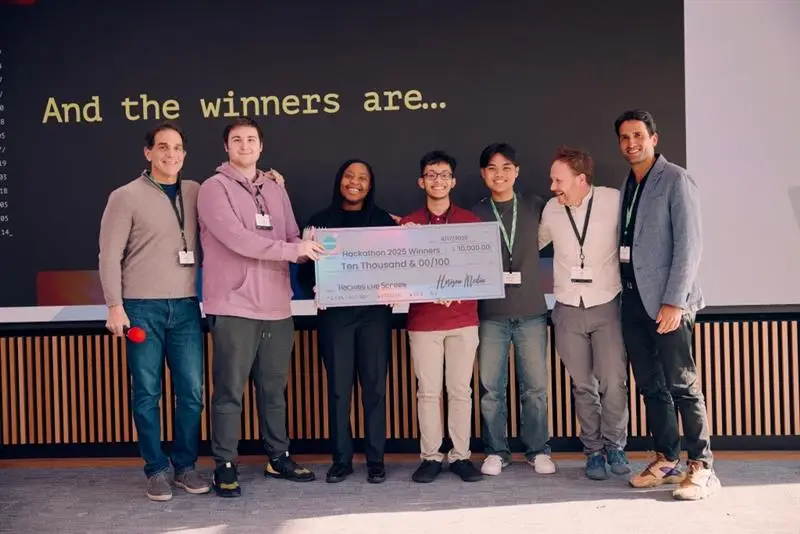
It started with coffee, curiosity, and a countdown clock.  On a crisp spring morning in Manhattan, Horizon Media and Google invited some of the Northeast’s brightest student minds to meet at the intersection of innovation and imagination. Inside the high-tech haven of Google’s St. John’s Terminal, Hacking the Screen kicked off—a one-day AI hackathon created to explore the future of entertainment marketing.  The challenge? Use Horizon Media’s proprietary audience data and Google’s AI platform to solve real-world marketing problems for a major entertainment brand. No fluff. Just strategy, code, and collaboration under pressure.  Students from nine universities—including Columbia, Cornell, NYU, Pace, Hunter College, and UMass—were selected for their mix of technical skills, business acumen, and creative problem-solving. Divided into teams, they had a few short hours to ideate, build, and pitch prototypes that could actually move the needle in media and advertising.  Throughout the day, teams toggled between data sets and dashboards, creative concepts and code libraries. One team explored dynamic creative testing powered by sentiment analysis. Another tested real-time clustering to identify micro-audiences hidden in plain sight. If it sounded like a startup accelerator, it kind of was—except this accelerator had a hard stop at 4 p.m. and a panel of executive judges from Horizon and Google waiting to hear what came of it all.  Five teams emerged with finished pitches. All delivered projects judged across five weighted categories: problem understanding, technical execution, creativity, real-world application, and presentation.  But it was Synth Solutions who left with the day’s top prize.  Their concept? A messaging optimization tool that used large language models to customize campaigns for nuanced, behaviorally distinct audience segments—think: the right words, at the right moment, for the right people. The team—Nyosha Homicil (Pace University), Matthew Labasan (Columbia University), Eric Kouperman (Pace University), and Apun Datta (Hunter College)—demonstrated not just technical skill, but an instinct for emotional intelligence at scale.  Four other standout teams pushed boundaries as well:  The Algorithmic Alchemists developed a real-time moodboard generator for campaign ideation using multimodal AI.  Team Vertex Vision experimented with audience simulations to forecast campaign engagement.  AdApt focused on language translation models for multicultural marketing efficiency.  Team Streamline built a campaign brief summarizer for account teams to save time and standardize execution.  All teams presented sharp insights and forward-thinking solutions. But the bigger takeaway was the shared hunger for what comes next—across disciplines, platforms, and perspectives.  The event also served as a pipeline to future opportunity. Select participants received internship offers from Horizon’s AI, analytics, and innovation teams. It wasn’t just a day of code—it was a launchpad.  In an age where algorithms often feel distant and opaque, Hacking the Screen made them personal. Tangible. Human. It revealed how artificial intelligence, when paired with the right people and a healthy dose of ambition, isn’t just about automation. It’s about acceleration—with intention.  Did you know? The most advanced AI tools today are trained not only on technical data but also human feedback, making emotional intelligence a crucial skill in building AI-powered marketing tools. The future isn’t just smart. It’s sensitive.  

Uncategorized

Coding the Future: Inside Horizon Media and Google’s AI Hackathon

It started with coffee, curiosity, and a countdown clock.  On a crisp spring morning in Manhattan, Horizon Media and Google invited some of the Northeast’s brightest student minds to meet at the intersection of innovation and imagination. Inside the high-tech haven of Google’s St. John’s Terminal, Hacking the Screen kicked off—a one-day AI hackathon created to explore the future of entertainment marketing.  The challenge? Use Horizon Media’s proprietary audience data and Google’s AI platform to solve real-world marketing problems for a major entertainment brand. No fluff. Just strategy, code, and collaboration under pressure.  Students from nine universities—including Columbia, Cornell, NYU, Pace, Hunter College, and UMass—were selected for their mix of technical skills, business acumen, and creative problem-solving. Divided into teams, they had a few short hours to ideate, build, and pitch prototypes that could actually move the needle in media and advertising.  Throughout the day, teams toggled between data sets and dashboards, creative concepts and code libraries. One team explored dynamic creative testing powered by sentiment analysis. Another tested real-time clustering to identify micro-audiences hidden in plain sight. If it sounded like a startup accelerator, it kind of was—except this accelerator had a hard stop at 4 p.m. and a panel of executive judges from Horizon and Google waiting to hear what came of it all.  Five teams emerged with finished pitches. All delivered projects judged across five weighted categories: problem understanding, technical execution, creativity, real-world application, and presentation.  But it was Synth Solutions who left with the day’s top prize.  Their concept? A messaging optimization tool that used large language models to customize campaigns for nuanced, behaviorally distinct audience segments—think: the right words, at the right moment, for the right people. The team—Nyosha Homicil (Pace University), Matthew Labasan (Columbia University), Eric Kouperman (Pace University), and Apun Datta (Hunter College)—demonstrated not just technical skill, but an instinct for emotional intelligence at scale.  Four other standout teams pushed boundaries as well:  The Algorithmic Alchemists developed a real-time moodboard generator for campaign ideation using multimodal AI.  Team Vertex Vision experimented with audience simulations to forecast campaign engagement.  AdApt focused on language translation models for multicultural marketing efficiency.  Team Streamline built a campaign brief summarizer for account teams to save time and standardize execution.  All teams presented sharp insights and forward-thinking solutions. But the bigger takeaway was the shared hunger for what comes next—across disciplines, platforms, and perspectives.  The event also served as a pipeline to future opportunity. Select participants received internship offers from Horizon’s AI, analytics, and innovation teams. It wasn’t just a day of code—it was a launchpad.  In an age where algorithms often feel distant and opaque, Hacking the Screen made them personal. Tangible. Human. It revealed how artificial intelligence, when paired with the right people and a healthy dose of ambition, isn’t just about automation. It’s about acceleration—with intention.  Did you know? The most advanced AI tools today are trained not only on technical data but also human feedback, making emotional intelligence a crucial skill in building AI-powered marketing tools. The future isn’t just smart. It’s sensitive.  

Scroll to Top