
Uncategorized

Uncategorized

The Future of Programmatic Is Being Decided Right Now

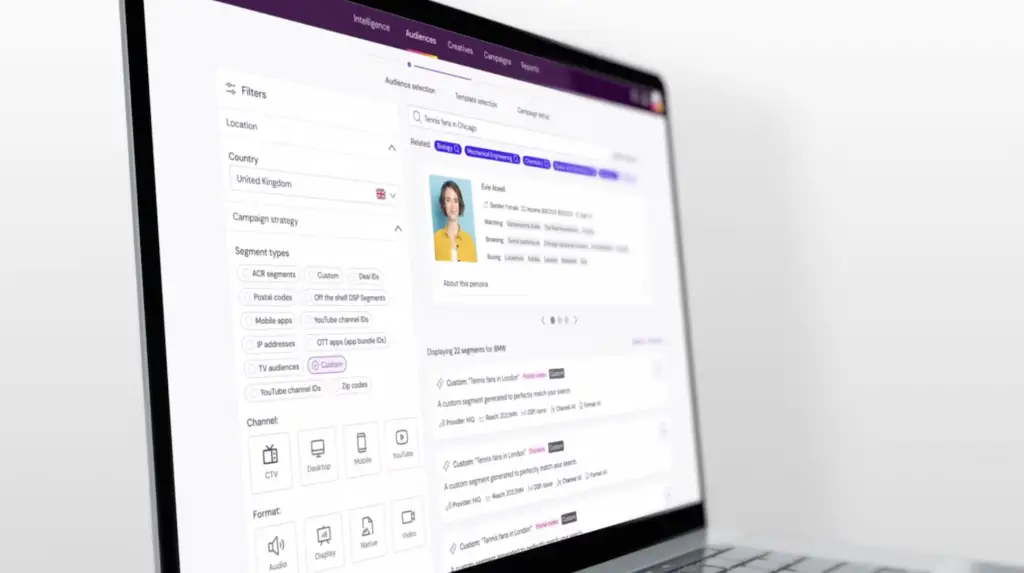
The Future of Programmatic Is Being Decided Right Now And the industry continues to focus on the wrong fights. By Navneet Singh VP, Managing Director of Programmatic | Product Contributor: Chris Gum, VP Data Solutions The programmatic industry thrives on a new obsession every few months, and the latest battleground is the DSP arms race. Who’s winning and who’s not, has been thrown into the spotlight by Publicis Groupe’s recent decision to no longer recommend The Trade Desk to its clients. Before that it was Amazon vs. The Trade Desk. While this is today’s news, the trade press is full of others: Are SSPs undercutting DSPs? Is OpenPath a genuine innovation or another revenue lever? Can IAB Tech Lab’s initiatives co-exist with AgenticAdvertising.org and those popularizing AdCP? While the industry remains fixated over these questions, they are fundamentally the wrong ones. We are arguing over the plumbing while ignoring the architecture. This isn’t about which platform wins the DSP arms race. The real question is who is in control. The focus on DSPs is a dangerous distraction, because the entity with the most to lose—the one whose budget is on the line—is not the platform, but the buyer. The real question is: Who Controls the Intelligence Layer? The question is not “who has the best platform or the lowest cost or take rate” but who owns the decisioning engine layer on top. The focus should be on the layer that determines which signals matter, which models to deploy, which platforms to activate against, and how to create a feedback loop that compounds learning over time. That is the fight that matters. The DSP is not the Strategy. The Intelligence that Commands it Is. DSPs deserve more credit than the current discourse gives them. The engineering required to process millions of bid requests per second, evaluate inventory across thousands of advertisers simultaneously, and clear auctions at sub-hundred-millisecond latency is a huge asset for the buyer. Think of a DSP’s processing power as a massive radar – the scope of what it can see and evaluate in real time is unlike anything else in the advertising ecosystem. But that radar has a structural constraint. A DSP is not just representing you; it is representing thousands of advertisers at once, allocating QPS across all of them, pacing budgets, managing competing auction dynamics. When the system identifies a high-value impression, it has to decide which of its many clients gets the shot – and that decision is governed by the platform’s economics, not yours. For years, this was the best arrangement available. The platform you picked determined your data strategy, supply path, optimization methodology, and measurement framework. The entire agency operating model in digital orbited around it. That era is ending – not because DSPs have stopped being useful, but because the strategic decisions are migrating above them. Which audiences to pursue, what outcomes to optimize toward, how to score users, how to learn from one cycle and feed that back into the next – those decisions increasingly belong to a layer the DSP does not own. Meanwhile, the lines between demand side and supply side are collapsing. SSPs are bringing ad servers, bidders, and containerized execution environments to the table – FreeWheel’s Buyer Cloud, Magnite’s SpringServe and ClearLine product suite, PubMatic’s Activate, and the containerization model Index Exchange pioneered. Buyers now have more surfaces to deploy decisioning than ever before. That’s a good thing – but only if you have an open orchestration system that connects all of those surfaces rather than treating each one as another disconnected silo. The proliferation of execution endpoints only reinforces the central point: the bidder is not where value compounds anymore. The intelligence layer above it is. Everyone Has a Platform. Not Many Are Building the Layer That Matters. In practice, the intelligence layer means building what we think of as an open operating system: a cross-platform signal engine that includes a platform, data architecture, identity spine, feedback mechanisms, human intelligence, and trained talent activating it. It trains predictive models on real business outcomes – actual conversions, revenue events, lifetime value – and distributes those scores into whatever execution surface makes the most sense. Amazon’s commerce engine for retail brands. Google’s intent infrastructure for search-driven performance. Microsoft’s open web supply. Magnite or FreeWheel’s curated CTV inventory. A direct SSP integration through containerized workloads. The platform is secondary. The intelligence is primary. This is the work being done with HorizonOS and its Blu platform. It is not a DSP replacement – it is a decisioning engine, designed to plug into big tech rather than compete with it. The result: a client’s data is portable, their models are interoperable, and their learnings compound from one platform to the next – because the system is built to be open for the benefit of the marketer, not the agency. With AI, there is a real opportunity to build smarter, more tailored radars on top of this. Intelligence systems can shape and filter what gets evaluated before it ever reaches the auction – scoring inventory at the supply level, sending more qualified bid requests, making decisions that sharpen demand-side execution by default. The intelligence layer determines the quality of what the bidder even gets to see. Top-Down AI vs. Bottom-Up Operating System The predominant AI narrative in the market is top-down automation – summarize the brief, generate the plan and compress the workflow. The pitch is: we are going to use AI to make everything we already do faster and cheaper. In theory, yes. But it focuses almost entirely on the planning layer while never touching the infrastructure underneath. Faster audience queries, cohesive forecasting, and rapid media planning are efficiencies, not solutions to core strategic problems The agencies approaching this correctly are building from the bottom at a foundational level. They are mapping connection points, ensuring data portability, and building legitimate feedback loops: we ran with this algorithm partner on this platform, here is what we learned, here is how that

Uncategorized

Horizon Launches HorizonOS, Industry’s First Integrated System Built on Open Ecosystem of Partners

Innovation accelerator HorizonOS Labs debuts with Orkin and Tropical Smoothie Cafe as founding members and inaugural tech partners spanning data & identity, planning & activation, creative & brand experiences, and analytics NEW YORK, Dec. 18, 2025 /PRNewswire/ — As holding companies race to automate their way to efficiency, Horizon Media is betting on a fundamentally different model: one where human expertise remains the irreplaceable core of marketing intelligence, amplified — not replaced — by tech advancements and AI. Today, Horizon Media unveiled HorizonOS, the first open integrated system designed for client growth. This launch signals a different path than the automation-first strategies which dominate the industry. Why Open Beats Closed The distinction matters. Open systems spur innovation. They create velocity through interoperability, shared progress, and transparency. They make it easy for intelligence to move across teams, partners, models, and data—so the entire system gets smarter and moves faster all in service of the client. As boundaries between insight, execution, and optimization dissolve, what used to be sequential becomes simultaneous. In this environment, “closed” stifles innovation and is structurally rigged against the client. The architecture of HorizonOS operates as an interconnected system bringing together three aspects of intelligence: Blu is the AI-native innovation ecosystem that translates strategy into action. It enables Horizon to deliver on enhanced “speed to insight,” where data plays a role in audience-centric strategies, informed and agile activation approaches, and closed-loop measurement. Agent Q serves as the internal thought partner, built on Google Gemini Enterprise and connected to Horizon’s collective knowledge. Human Intelligence is the critical differentiator—the layer that competitors are systematically dismantling in pursuit of automation. At Horizon, Client Architects supply business context and competitive intelligence that sharpens our strategic recommendations, Marketing Sciences experts run experimentation loops, with predictive models and segmentation insights flowing back to refine outputs,Advanced Analytics teams build measurement currencies that calibrate how the OS reads market signals, Futures Research & Insights surfaces emerging trends and landscape shifts that update the system’s understanding in real time, and Product Foundry builders harvest innovation from the Labs pipeline, integrating new capabilities as they mature. “Holding companies are focused on building self-service platforms and automations to benefit their own operational efficiency—which drives agency profits,” said Bob Lord, President of Horizon Media Holdings. “They’re building closed systems of machines talking to themselves, eventually delivering the most reductive solutions. We’re taking the opposite approach: HorizonOS is designed to bring human expertise and the latest technology to the forefront, creating conditions for co-creation and client growth.” HorizonOS Labs: The Innovation Accelerator Horizon concurrently announced HorizonOS Labs, an innovation accelerator that systematically and continuously converts emerging technology into client value by testing, validating, and scaling new capabilities. The launch establishes a new architectural standard for how agencies can evolve in the marketing landscape — one built on an open ecosystem and collaboration, and the conviction that the most sophisticated algorithms still require human judgment. For clients, Labs offers early access to proven innovations with less risk, and a co-creation model where specific business challenges shape what gets built. John Koenigsberg, EVP Head of Product Partnerships and Asmau Ahmed, a former GoogleX executive and Innovator-in-Residence at Horizon will lead the Labs, which will function through three models: Pilot to Platform – Systematic sprints with cutting-edge partners—15+ active in flight, testing everything from GenAI creative tools to advanced measurement systems. These are structured pilots with clear ROI metrics that prove integration potential into Blu’s ecosystem. Bespoke Client Solutions works directly with brands to architect solutions to specific challenges, turning a client’s challenge into a partner pilot and potentially future platform capabilities. Curated Marketplace establishes the foundation for approved developers to build on Horizon’s infrastructure and open protocols, with published APIs, SDKs, and emerging standards. Early client engagement with Tropical Smoothie Cafe and Orkin and inaugural technology partners—each a leader in their domain—include: Data & Identity: ID5 and ZeroToOne, providing solutions to navigate the complex identity landscape Activation & Planning: Kargo, Sightly, The Trade Desk, and Vurvey Labs, offering bid, cultural, and audience intelligence and robust planning capabilities Creative & Brand Experiences: Firsthand, Kerv, Smartly, and Vidmob, scaling and optimizing creative development, scoring, and delivery Analytics: Newton Research, delivering advanced measurement and real-time intelligence Tropical Smoothie Cafe and ZeroToOne’s pilot is centered around building predictive QSR audience models in Blu. This initiative will leverage daily refreshed signals to identify new consumers with the goal of driving profitable growth and market share. Orkin and The Trade Desk’s new pilot, integrated into Blu, directly links media investment to strategic business outcomes. Their custom bidding solution uses real-time signals and first-party data to predict and optimize long-term customer value and retention. “HorizonOS Labs is the connective tissue that makes the vast universe of AI-native marketing capabilities work together intelligently and responsibly for our clients,” John Koenigsberg said. “By bringing together marketers and premier technology partners to create an innovation flywheel, this is about de-risking early adoption for our clients and providing them with a first-mover advantage.” The Stakes for the Industry Converging forces make this a defining moment. AI has reached the orchestration era, new industry standards are emerging, and the window for leadership is closing. For Horizon, the bet is clear. An open ecosystem of partners, ideas, and intelligence drives client growth, which beats closed systems that benefit the holding company. About Horizon Media Holdings Horizon Media Holdings is the privately-held parent company of Horizon Media, the largest U.S. media agency and the largest independent globally, with additional portfolio companies including – Horizon Next (full-service marketing); Horizon Commerce (commerce and digital experiences); Horizon Business (consulting, media and creative); One Horizon (full-service advertising); HS&E (sports and experiential); and Blue Hour Studios (influencer agency). Horizon Media Holdings has a 50/50 partnership with Havas Media Network in the performance-driven agency network, Horizon Global. Horizon Holdings drives enterprise-level innovation, fosters collaboration across its portfolio, and explores new growth opportunities and technology solutions to help its clients navigate the shifting marketing challenges of today and tomorrow.


Uncategorized

Coding the Future: Inside Horizon Media and Google’s AI Hackathon

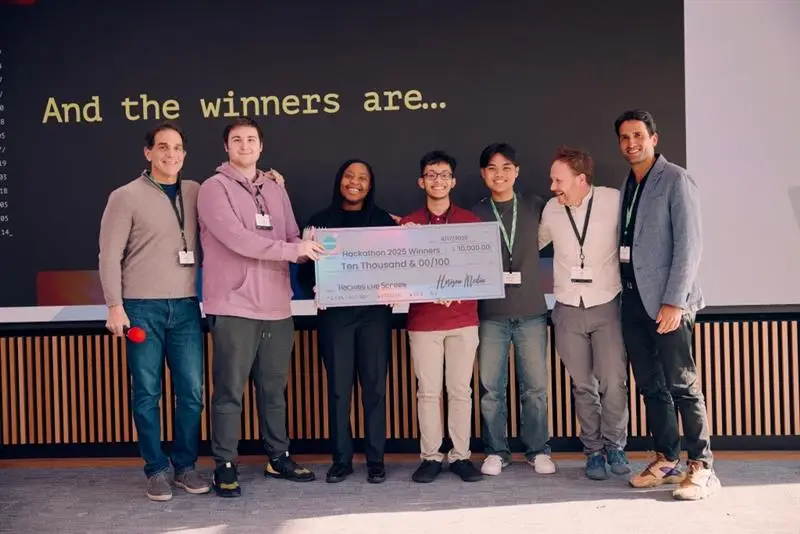
It started with coffee, curiosity, and a countdown clock.  On a crisp spring morning in Manhattan, Horizon Media and Google invited some of the Northeast’s brightest student minds to meet at the intersection of innovation and imagination. Inside the high-tech haven of Google’s St. John’s Terminal, Hacking the Screen kicked off—a one-day AI hackathon created to explore the future of entertainment marketing.  The challenge? Use Horizon Media’s proprietary audience data and Google’s AI platform to solve real-world marketing problems for a major entertainment brand. No fluff. Just strategy, code, and collaboration under pressure.  Students from nine universities—including Columbia, Cornell, NYU, Pace, Hunter College, and UMass—were selected for their mix of technical skills, business acumen, and creative problem-solving. Divided into teams, they had a few short hours to ideate, build, and pitch prototypes that could actually move the needle in media and advertising.  Throughout the day, teams toggled between data sets and dashboards, creative concepts and code libraries. One team explored dynamic creative testing powered by sentiment analysis. Another tested real-time clustering to identify micro-audiences hidden in plain sight. If it sounded like a startup accelerator, it kind of was—except this accelerator had a hard stop at 4 p.m. and a panel of executive judges from Horizon and Google waiting to hear what came of it all.  Five teams emerged with finished pitches. All delivered projects judged across five weighted categories: problem understanding, technical execution, creativity, real-world application, and presentation.  But it was Synth Solutions who left with the day’s top prize.  Their concept? A messaging optimization tool that used large language models to customize campaigns for nuanced, behaviorally distinct audience segments—think: the right words, at the right moment, for the right people. The team—Nyosha Homicil (Pace University), Matthew Labasan (Columbia University), Eric Kouperman (Pace University), and Apun Datta (Hunter College)—demonstrated not just technical skill, but an instinct for emotional intelligence at scale.  Four other standout teams pushed boundaries as well:  The Algorithmic Alchemists developed a real-time moodboard generator for campaign ideation using multimodal AI.  Team Vertex Vision experimented with audience simulations to forecast campaign engagement.  AdApt focused on language translation models for multicultural marketing efficiency.  Team Streamline built a campaign brief summarizer for account teams to save time and standardize execution.  All teams presented sharp insights and forward-thinking solutions. But the bigger takeaway was the shared hunger for what comes next—across disciplines, platforms, and perspectives.  The event also served as a pipeline to future opportunity. Select participants received internship offers from Horizon’s AI, analytics, and innovation teams. It wasn’t just a day of code—it was a launchpad.  In an age where algorithms often feel distant and opaque, Hacking the Screen made them personal. Tangible. Human. It revealed how artificial intelligence, when paired with the right people and a healthy dose of ambition, isn’t just about automation. It’s about acceleration—with intention.  Did you know? The most advanced AI tools today are trained not only on technical data but also human feedback, making emotional intelligence a crucial skill in building AI-powered marketing tools. The future isn’t just smart. It’s sensitive.  

Uncategorized

Coding the Future: Inside Horizon Media and Google’s AI Hackathon

It started with coffee, curiosity, and a countdown clock.  On a crisp spring morning in Manhattan, Horizon Media and Google invited some of the Northeast’s brightest student minds to meet at the intersection of innovation and imagination. Inside the high-tech haven of Google’s St. John’s Terminal, Hacking the Screen kicked off—a one-day AI hackathon created to explore the future of entertainment marketing.  The challenge? Use Horizon Media’s proprietary audience data and Google’s AI platform to solve real-world marketing problems for a major entertainment brand. No fluff. Just strategy, code, and collaboration under pressure.  Students from nine universities—including Columbia, Cornell, NYU, Pace, Hunter College, and UMass—were selected for their mix of technical skills, business acumen, and creative problem-solving. Divided into teams, they had a few short hours to ideate, build, and pitch prototypes that could actually move the needle in media and advertising.  Throughout the day, teams toggled between data sets and dashboards, creative concepts and code libraries. One team explored dynamic creative testing powered by sentiment analysis. Another tested real-time clustering to identify micro-audiences hidden in plain sight. If it sounded like a startup accelerator, it kind of was—except this accelerator had a hard stop at 4 p.m. and a panel of executive judges from Horizon and Google waiting to hear what came of it all.  Five teams emerged with finished pitches. All delivered projects judged across five weighted categories: problem understanding, technical execution, creativity, real-world application, and presentation.  But it was Synth Solutions who left with the day’s top prize.  Their concept? A messaging optimization tool that used large language models to customize campaigns for nuanced, behaviorally distinct audience segments—think: the right words, at the right moment, for the right people. The team—Nyosha Homicil (Pace University), Matthew Labasan (Columbia University), Eric Kouperman (Pace University), and Apun Datta (Hunter College)—demonstrated not just technical skill, but an instinct for emotional intelligence at scale.  Four other standout teams pushed boundaries as well:  The Algorithmic Alchemists developed a real-time moodboard generator for campaign ideation using multimodal AI.  Team Vertex Vision experimented with audience simulations to forecast campaign engagement.  AdApt focused on language translation models for multicultural marketing efficiency.  Team Streamline built a campaign brief summarizer for account teams to save time and standardize execution.  All teams presented sharp insights and forward-thinking solutions. But the bigger takeaway was the shared hunger for what comes next—across disciplines, platforms, and perspectives.  The event also served as a pipeline to future opportunity. Select participants received internship offers from Horizon’s AI, analytics, and innovation teams. It wasn’t just a day of code—it was a launchpad.  In an age where algorithms often feel distant and opaque, Hacking the Screen made them personal. Tangible. Human. It revealed how artificial intelligence, when paired with the right people and a healthy dose of ambition, isn’t just about automation. It’s about acceleration—with intention.  Did you know? The most advanced AI tools today are trained not only on technical data but also human feedback, making emotional intelligence a crucial skill in building AI-powered marketing tools. The future isn’t just smart. It’s sensitive.  

Uncategorized

Horizon Media Switches to Sharethrough GreenPMPs and Improves Performance While Cutting Emissions in Half

In a groundbreaking collaboration, Horizon Media, the largest independent media agency in the U.S., partnered with Sharethrough to pilot a shift to GreenPMPs™ (Private Marketplaces designed to reduce carbon emissions in advertising). The project, which launched in May 2024, aimed to assess the sustainability and performance benefits of transitioning all deals to GreenPMPs. Today, the results are in, and the findings mark a significant step forward for sustainable advertising. The Pilot: An Industry-First Test of Sustainability at Scale Horizon Media initially tested GreenPMPs with smaller campaigns, observing no negative impact on scale and maintaining or even improving performance metrics. Encouraged by these initial findings, the agency committed to switching all Sharethrough PMPs to GreenPMPs starting in May 2024. The objective was clear: measure the real impact on sustainability and determine if this could be achieved without compromising scale or performance. By the end of the test period, the collaboration exceeded expectations. Sustainability Impact: Emissions Reduced and Compensated The results were impressive. Since the switch to GreenPMPs, over 300 million impressions were delivered resulting in an average 51% reduction of carbon emissions for display campaigns and 57% reduction for video campaigns. This reduction resulted in avoiding 34 metric tons of C02e, which is the equivalent to avoiding the emissions from: 86,670 miles driven by an average gas-powered car which is the same as driving from NYC to LA 31 times! Charging nearly 2.8 million smartphones Additionally, since switching to GreenPMPs, 88 metric tons of CO2e were measured and fully compensated through carbon-removal projects. To put this into perspective: This equates to the carbon emissions from driving a gasoline-powered car 273,573 miles – the equivalent of circling the Earth 11 times. Alternatively, it’s comparable to fully charging over 52 million smartphones These results align with Horizon Media’s broader commitment to carbon neutrality by 2030, showcasing how sustainable practices can be seamlessly integrated into large-scale advertising operations. Performance and Scale: Sustainability Without Compromise In addition to reducing emissions, Horizon Media was able to maintain or increase campaign performance, outperforming benchmarks from the first half of 2024 when GreenPMPs were not applied. Overall, GreenPMPs generated a 10% viewability increase on standard display ads and more than doubled CTR on online video ads while maintaining a video completion rate above industry standards. Concerns about limitations in campaign scale due to the removal of high-emission websites were unfounded. Instead, the use of GreenPMPs redirected impressions to more premium websites and placements, enhancing campaign quality across all formats. This demonstrates that sustainability can go hand-in-hand with superior media performance and reach. The Future: Horizon Media Commits to GreenPMPs Given the success of the pilot, Horizon Media has decided to continue using Sharethrough’s GreenPMPs for all future campaigns. This decision reinforces Horizon Media’s leadership in adopting innovative, sustainable advertising practices and supporting their clients in achieving better returns on media investments. “The advertising industry has a unique opportunity to become one of the first industries to reach net-zero emissions,” said Frank Maguire, VP of Insights, Strategy, and Sustainability at Sharethrough. “To get there, we need advertisers to prioritize sustainable partners and share how sustainability benefits both the planet and business performance. Horizon Media’s swift actions and commitment to GreenPMPs exemplify how we can collectively make a difference.” “Partnering with Sharethrough on GreenPMPs has allowed us to take meaningful steps toward sustainability without sacrificing the scale or effectiveness of our campaigns,” said Jean-Marc Papin, SVP, Media Technology at Horizon Media. “We are proud to leverage solutions that align with our vision for a greener future while delivering exceptional value to our clients. A Model for the Industry The Horizon Media and Sharethrough collaboration serves as a powerful case study for the advertising industry. By demonstrating that sustainability can enhance—not hinder—performance, this pilot paves the way for other agencies and advertisers to adopt similar practices. As the industry moves towards net-zero emissions, partnerships like this one highlight how collaboration, innovation, and commitment can drive meaningful change. With Horizon Media continuing its use of GreenPMPs™, this initiative not only sets a precedent but also inspires others to embrace the dual benefits of sustainability and success in advertising.

Uncategorized

Horizon Media Switches to Sharethrough GreenPMPs and Improves Performance While Cutting Emissions in Half

In a groundbreaking collaboration, Horizon Media, the largest independent media agency in the U.S., partnered with Sharethrough to pilot a shift to GreenPMPs™ (Private Marketplaces designed to reduce carbon emissions in advertising). The project, which launched in May 2024, aimed to assess the sustainability and performance benefits of transitioning all deals to GreenPMPs. Today, the results are in, and the findings mark a significant step forward for sustainable advertising. The Pilot: An Industry-First Test of Sustainability at Scale Horizon Media initially tested GreenPMPs with smaller campaigns, observing no negative impact on scale and maintaining or even improving performance metrics. Encouraged by these initial findings, the agency committed to switching all Sharethrough PMPs to GreenPMPs starting in May 2024. The objective was clear: measure the real impact on sustainability and determine if this could be achieved without compromising scale or performance. By the end of the test period, the collaboration exceeded expectations. Sustainability Impact: Emissions Reduced and Compensated The results were impressive. Since the switch to GreenPMPs, over 300 million impressions were delivered resulting in an average 51% reduction of carbon emissions for display campaigns and 57% reduction for video campaigns. This reduction resulted in avoiding 34 metric tons of C02e, which is the equivalent to avoiding the emissions from: 86,670 miles driven by an average gas-powered car which is the same as driving from NYC to LA 31 times! Charging nearly 2.8 million smartphones Additionally, since switching to GreenPMPs, 88 metric tons of CO2e were measured and fully compensated through carbon-removal projects. To put this into perspective: This equates to the carbon emissions from driving a gasoline-powered car 273,573 miles – the equivalent of circling the Earth 11 times. Alternatively, it’s comparable to fully charging over 52 million smartphones These results align with Horizon Media’s broader commitment to carbon neutrality by 2030, showcasing how sustainable practices can be seamlessly integrated into large-scale advertising operations. Performance and Scale: Sustainability Without Compromise In addition to reducing emissions, Horizon Media was able to maintain or increase campaign performance, outperforming benchmarks from the first half of 2024 when GreenPMPs were not applied. Overall, GreenPMPs generated a 10% viewability increase on standard display ads and more than doubled CTR on online video ads while maintaining a video completion rate above industry standards. Concerns about limitations in campaign scale due to the removal of high-emission websites were unfounded. Instead, the use of GreenPMPs redirected impressions to more premium websites and placements, enhancing campaign quality across all formats. This demonstrates that sustainability can go hand-in-hand with superior media performance and reach. The Future: Horizon Media Commits to GreenPMPs Given the success of the pilot, Horizon Media has decided to continue using Sharethrough’s GreenPMPs for all future campaigns. This decision reinforces Horizon Media’s leadership in adopting innovative, sustainable advertising practices and supporting their clients in achieving better returns on media investments. “The advertising industry has a unique opportunity to become one of the first industries to reach net-zero emissions,” said Frank Maguire, VP of Insights, Strategy, and Sustainability at Sharethrough. “To get there, we need advertisers to prioritize sustainable partners and share how sustainability benefits both the planet and business performance. Horizon Media’s swift actions and commitment to GreenPMPs exemplify how we can collectively make a difference.” “Partnering with Sharethrough on GreenPMPs has allowed us to take meaningful steps toward sustainability without sacrificing the scale or effectiveness of our campaigns,” said Jean-Marc Papin, SVP, Media Technology at Horizon Media. “We are proud to leverage solutions that align with our vision for a greener future while delivering exceptional value to our clients. A Model for the Industry The Horizon Media and Sharethrough collaboration serves as a powerful case study for the advertising industry. By demonstrating that sustainability can enhance—not hinder—performance, this pilot paves the way for other agencies and advertisers to adopt similar practices. As the industry moves towards net-zero emissions, partnerships like this one highlight how collaboration, innovation, and commitment can drive meaningful change. With Horizon Media continuing its use of GreenPMPs™, this initiative not only sets a precedent but also inspires others to embrace the dual benefits of sustainability and success in advertising.

Uncategorized

Beyond the Horizon: The Future Unveiled at CES 2025

By Domenic Venuto, Chief of Product and Data at Horizon Media Every year, CES delivers on its promise of a futuristic spectacle—a dynamic convergence of technology, innovation, and bold ideas redefining the world we live in. This year was no different. As Horizon brought our largest-ever delegation to CES 2025, we embodied our goal to empower clients with technology that uncovers opportunities, informs smarter decisions, and drives measurable results. Now in its 58th year, CES has always been where the future begins. Iconic innovations such as the mouse, VCR, 5G, and voice-enabled assistants first captured the world’s imagination on this stage. This year, with over 4,500 exhibitors spread across 3 million square feet—including the expanded West Hall focused on mobility solutions—CES once again lived up to its reputation. Why do marketers flock to CES? Because it’s the only place to see and experience what’s next and to reflect on what it means as consumers, executives, and industry leaders. The innovations unveiled here are often available within 12-18 months, giving brands a critical edge in understanding how to connect with evolving audiences. CES also exemplifies the ongoing transition from consumer electronics companies to consumer experience companies—an essential shift for the future. After navigating it all, a few key themes emerged that encapsulate CES 2025’s biggest trends and implications for marketers, consumers, and brands alike. Five Forces Shaping the Future CES 2025 cemented its status as the proving ground for transformative innovation. This year, five forces dominated discussions and demonstrate how technology is shaping a more connected, sustainable, and predictive world: Artificial Intelligence: Intelligence in Action AI wasn’t just present—it was pervasive. From TVs that optimize picture and sound based on your preferences to appliances that anticipate your needs, AI is evolving from invisible processes to active, user-centric experiences. Generative AI stole the show, enhancing productivity, improving health outcomes, and redefining how we connect. Brands like LG, Panasonic, and Samsung are leading the charge with AI agents integrated into everything from home appliances to mobility solutions, delivering deeply personalized and seamless experiences. TCL’s AI Me robot stood out as a glimpse into how AI could shape the next generation, offering an engaging, adaptive companion designed to foster creativity, support learning, and even help develop emotional intelligence in children. The connected home, largely conceptual last year, has become a tangible reality at CES 2025. Digital Health: Empowering Longevity and Equity The rise of AgeTech highlights the critical role of technology in caregiving, particularly for the sandwich generation balancing the needs of aging parents and children. CES showcased devices like Withings’ connected home urine lab and Samsung’s elder care platforms, emphasizing health equity, affordability, and empowerment. This innovation is transforming healthcare from reactive to proactive, creating opportunities for brands to engage with consumers on deeply personal levels. Mobility: The New Frontier CES has become synonymous with automotive innovation. This year, the focus expanded from EVs to integrated in-cabin AI experiences that monitor vitals, recommend coffee stops, and even act as mobile offices. Amazon made waves with its partnership with Hyundai, allowing customers in 48 U.S. cities to purchase vehicles directly through Amazon. Sony and Honda’s Afeela, available for pre-order now, promises to redefine mobility with its blend of technology and luxury. The in-cabin experience remains a hotly contested space, with consumer experience companies preparing for a fully autonomous future led by Waymo and other players. Sustainability: From Goals to Action Bold sustainability commitments are evolving into tangible progress. Companies are embracing circular economies, designing products that reduce emissions across their entire lifecycle, and integrating recycled materials into cutting-edge tech. Panasonic is the standard, unveiling ambitious initiatives that demonstrated how sustainability can drive both innovation and impact. From integrating recycled materials into cutting-edge technologies to adopting circular economies that reduce emissions throughout a product’s lifecycle, Panasonic illustrated a holistic approach to sustainability. Its commitment to aligning business growth with environmental stewardship was a powerful reminder that progress and responsibility can go hand in hand. 5. Quantum Computing: Unlocking Unimaginable Potential While still nascent, quantum computing emerged as a beacon of next-gen innovation. From advancing cybersecurity to enabling real-time insights at an unprecedented scale, exhibitors like Cellid and DEVCOM showcased hardware and software poised to transform industries. As technology demands grow, quantum computing will be essential for managing more data, more screens, and more complexity. The Connected Consumer: A New Paradigm This year’s show wasn’t just about individual devices—it was about ecosystems. The connected home and car are evolving into unified experiences that bridge home, work, and play. TCL and Hisense, known for quality TVs at affordable prices, are expanding their connected home appliances footprint, aiming to take market share from dominant players like LG and Samsung. Platforms like Samsung’s SmartThings and LG’s ThinQ are leading the charge in harmonizing technology with human behavior. These AI-driven insights and integrations empower brands to deliver not just products but tailored solutions that simplify and enhance daily life. Looking Ahead CES has always been a window into the future, and this year is no exception. The innovations unveiled at this year’s show aren’t just impressive—they’re essential. They represent the tools we need to solve some of the biggest challenges of our time, from climate change to healthcare disparities, while unlocking opportunities for growth and connection. At Horizon Media, we thrive on this intersection of technology and human behavior. The insights we gathered will fuel our strategies as we help clients navigate this dynamic landscape, because at Horizon, we believe the future isn’t just about technology—it’s about what it enables us to achieve together. For a deeper dive into any of these topics or to explore how these trends can accelerate your growth, let’s connect.

Uncategorized

Beyond the Horizon: The Future Unveiled at CES 2025

By Domenic Venuto, Chief of Product and Data at Horizon Media Every year, CES delivers on its promise of a futuristic spectacle—a dynamic convergence of technology, innovation, and bold ideas redefining the world we live in. This year was no different. As Horizon brought our largest-ever delegation to CES 2025, we embodied our goal to empower clients with technology that uncovers opportunities, informs smarter decisions, and drives measurable results. Now in its 58th year, CES has always been where the future begins. Iconic innovations such as the mouse, VCR, 5G, and voice-enabled assistants first captured the world’s imagination on this stage. This year, with over 4,500 exhibitors spread across 3 million square feet—including the expanded West Hall focused on mobility solutions—CES once again lived up to its reputation. Why do marketers flock to CES? Because it’s the only place to see and experience what’s next and to reflect on what it means as consumers, executives, and industry leaders. The innovations unveiled here are often available within 12-18 months, giving brands a critical edge in understanding how to connect with evolving audiences. CES also exemplifies the ongoing transition from consumer electronics companies to consumer experience companies—an essential shift for the future. After navigating it all, a few key themes emerged that encapsulate CES 2025’s biggest trends and implications for marketers, consumers, and brands alike. Five Forces Shaping the Future CES 2025 cemented its status as the proving ground for transformative innovation. This year, five forces dominated discussions and demonstrate how technology is shaping a more connected, sustainable, and predictive world: Artificial Intelligence: Intelligence in Action AI wasn’t just present—it was pervasive. From TVs that optimize picture and sound based on your preferences to appliances that anticipate your needs, AI is evolving from invisible processes to active, user-centric experiences. Generative AI stole the show, enhancing productivity, improving health outcomes, and redefining how we connect. Brands like LG, Panasonic, and Samsung are leading the charge with AI agents integrated into everything from home appliances to mobility solutions, delivering deeply personalized and seamless experiences. TCL’s AI Me robot stood out as a glimpse into how AI could shape the next generation, offering an engaging, adaptive companion designed to foster creativity, support learning, and even help develop emotional intelligence in children. The connected home, largely conceptual last year, has become a tangible reality at CES 2025. Digital Health: Empowering Longevity and Equity The rise of AgeTech highlights the critical role of technology in caregiving, particularly for the sandwich generation balancing the needs of aging parents and children. CES showcased devices like Withings’ connected home urine lab and Samsung’s elder care platforms, emphasizing health equity, affordability, and empowerment. This innovation is transforming healthcare from reactive to proactive, creating opportunities for brands to engage with consumers on deeply personal levels. Mobility: The New Frontier CES has become synonymous with automotive innovation. This year, the focus expanded from EVs to integrated in-cabin AI experiences that monitor vitals, recommend coffee stops, and even act as mobile offices. Amazon made waves with its partnership with Hyundai, allowing customers in 48 U.S. cities to purchase vehicles directly through Amazon. Sony and Honda’s Afeela, available for pre-order now, promises to redefine mobility with its blend of technology and luxury. The in-cabin experience remains a hotly contested space, with consumer experience companies preparing for a fully autonomous future led by Waymo and other players. Sustainability: From Goals to Action Bold sustainability commitments are evolving into tangible progress. Companies are embracing circular economies, designing products that reduce emissions across their entire lifecycle, and integrating recycled materials into cutting-edge tech. Panasonic is the standard, unveiling ambitious initiatives that demonstrated how sustainability can drive both innovation and impact. From integrating recycled materials into cutting-edge technologies to adopting circular economies that reduce emissions throughout a product’s lifecycle, Panasonic illustrated a holistic approach to sustainability. Its commitment to aligning business growth with environmental stewardship was a powerful reminder that progress and responsibility can go hand in hand. 5. Quantum Computing: Unlocking Unimaginable Potential While still nascent, quantum computing emerged as a beacon of next-gen innovation. From advancing cybersecurity to enabling real-time insights at an unprecedented scale, exhibitors like Cellid and DEVCOM showcased hardware and software poised to transform industries. As technology demands grow, quantum computing will be essential for managing more data, more screens, and more complexity. The Connected Consumer: A New Paradigm This year’s show wasn’t just about individual devices—it was about ecosystems. The connected home and car are evolving into unified experiences that bridge home, work, and play. TCL and Hisense, known for quality TVs at affordable prices, are expanding their connected home appliances footprint, aiming to take market share from dominant players like LG and Samsung. Platforms like Samsung’s SmartThings and LG’s ThinQ are leading the charge in harmonizing technology with human behavior. These AI-driven insights and integrations empower brands to deliver not just products but tailored solutions that simplify and enhance daily life. Looking Ahead CES has always been a window into the future, and this year is no exception. The innovations unveiled at this year’s show aren’t just impressive—they’re essential. They represent the tools we need to solve some of the biggest challenges of our time, from climate change to healthcare disparities, while unlocking opportunities for growth and connection. At Horizon Media, we thrive on this intersection of technology and human behavior. The insights we gathered will fuel our strategies as we help clients navigate this dynamic landscape, because at Horizon, we believe the future isn’t just about technology—it’s about what it enables us to achieve together. For a deeper dive into any of these topics or to explore how these trends can accelerate your growth, let’s connect.

Uncategorized

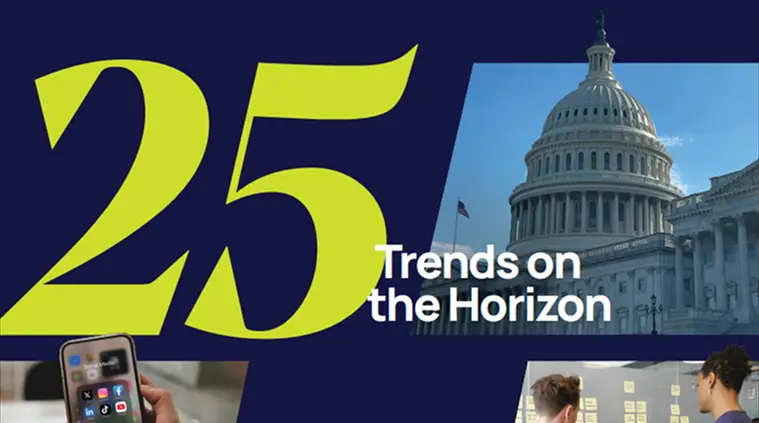
“25 Trends on The Horizon in ’25” Report: Anticipating Change, Embracing Opportunity

“25 Trends on The Horizon in ’25” Report: Anticipating Change, Embracing Opportunity NEW YORK (Jan. 7, 2025) Horizon Media Holdings, parent company of the full-service marketing portfolio including Horizon Media, the largest independent media agency globally, today unveiled its inaugural annual marketing industry forecast – “25 Trends on the Horizon in ’25.” The 2025 report maps out the trends that leaders from across Horizon’s portfolio predict will reshape how brands connect with consumers in a rapidly evolving media landscape. These predictions center on the critical interplay of technology, cultural intelligence, and creative strategy, helping businesses stay ahead in a complex and fragmented marketplace. The report explores the shifts that are poised to redefine media, marketing, and consumer engagement over the coming year and includes 25 predictions across six focus areas: Advertising Shapes — and Reflects — Our World; The Consumer, Today; Behind the Brand; Media Meets Momentum: Technology Driving New Connections; Essential Channels for a Fragmented World: Experiential, OOH, and Audio; and Ethics, Privacy & Progress: The New Org & Partnership Guide. Showcasing Horizon’s commitment to industry-leading innovation, data-driven creativity, and transformative solutions, the report incorporates insights from Horizon Media, Horizon Next (full-service marketing), Night Market (commerce), One Horizon (full-service advertising), HS&E (sports and experiential), Blue Hour Studios (social agency), First Tube (moments marketing), and Green Thread (B2B marketing). Some of the insights from “25 in ’25” include: Bill Koenigsberg, CEO and founder, Horizon Media — on the future of agencies: “…data alone doesn’t drive meaningful outcomes. The ability to refine and integrate data is what makes the difference. That’s why our approach to data emphasizes the flow of information — the way insights are harnessed and deployed — to fuel smarter decision making…As I reflect on how data and emerging technologies have changed the way we do business, I recognize the definition of an agency is evolving as quickly as the definition of advertising. The traditional holding company model, built on scale for its own sake, is giving way to something more dynamic and responsive. Today, Horizon isn’t just adapting to these changes—we’re driving them.” Bob Lord, President, Horizon Media Holdings — on technology acceleration: “As we look toward marketing trends and drivers for 2025, the headline is simple: technological changes will accelerate – reshaping enterprise strategies, consumer behaviors, and innovation. The fusion of technology and marketing will redefine how businesses engage, decide, and compete. Artificial Intelligence (AI) and Large Language Models (LLMs) are not just trends; they represent a transformative shift in creating opportunities and addressing challenges…The question is not whether technology will redefine marketing, but whether marketers will be ready navigate consumer behaviors increasingly shaped by technology innovations.” Domenic Venuto, EVP, Chief Product & Data Officer, Horizon Media — on democratized access: “Horizon’s blu. LLM deployment democratizes access to even more vast datasets, offering a conversational interface that replaces technical processes and puts powerful insights into the hands of all marketers instantly. The result will be a transformative shift: marketers querying data, refining audience segments, and extracting consumer insights in seconds, with less reliance on technical expertise. The platform moves beyond traditional media planning to encompass business and marketing intelligence, integrating data from structured, unstructured, and synthetic sources to provide a richer, more accurate 360-degree view of the customer journey.” Maxine Gurevich, SVP, Cultural Intelligence, Horizon Media — on rethinking audience engagement: “Cultural intelligence will be central to how brands build emotional resonance, foster loyalty, and drive impact. As consumers increasingly align themselves with subcultures and value hyper-personalized experiences, marketers must rethink how they engage audiences — not just by observing cultural trends but by embedding them into their strategies…Cultural resonance doesn’t come from targeting a demographic; it’s about understanding the passions that define people’s lives.” David Campanelli, President, Global Investment, Horizon Media — on industry growth: “The global advertising industry is projected to grow this year, but at a slower pace than in 2024. Key growth drivers include retail media and other digital channels, but economic uncertainty is leading marketers — especially those in the U.S. — to temper growth expectations…While the global market is robust, a more cautious outlook in North America reflects economic trepidation. For marketers, the emphasis will be on balancing investment across high-performing channels like retail media while navigating uncertainties in regional markets.” Latraviette Smith-Wilson, EVP, Chief Marketing & Equity Officer, Horizon Media — on inclusion intelligence: “Forward-thinking companies will integrate DEI across operations, culture, and values, moving beyond HR-centric programs to enterprise-wide priorities with measurable outcomes. Advanced technologies like AI and data analytics will play a pivotal role in enhancing accountability, tracking progress, and identifying gaps with precision. Simultaneously, as inclusive practices enhance both organizational performance and consumer engagement, the most effective marketing will increasingly reflect this strategic integration of DEI…These businesses will reframe the competitive edge, positioning themselves as the standard for sustainable success and proving that inclusion is not just a driver of progress but a prerequisite for prosperity.” Alejandra Rubio, SVP, Head of Business and Brand Strategy, One Horizon — on amplifying creativity: “Far from replacing human talent, AI enhances creative potential by handling tasks like concept iteration and asset adaptation. It allows agencies to move faster and think bigger, delivering bold, boundary-pushing ideas that align with brand objectives. The future isn’t about automating creativity — it’s about amplifying it…This year, the industry will spotlight the importance of craft in advertising, but with an intelligence-backed foundation. “ Randy Browning, President, Night Market — on powering incremental revenue: “This year the advertising industry will embrace what Horizon Media’s Night Market coined ‘the pervasive store.’ Retailers are integrating digital media into physical stores with technologies like interactive kiosks, digital shelf displays, and smart shopping carts, transforming aisles into digital touchpoints. This omnichannel approach gives brands a holistic view of the customer journey and unlocks opportunities to boost engagement and conversions across both online and offline channels…advertisers will face increasing pressure to prove ROI and incremental revenue from their investments. The industry’s fragmented attribution methodologies and reliance on metrics like

Uncategorized

“25 Trends on The Horizon in ’25” Report: Anticipating Change, Embracing Opportunity

“25 Trends on The Horizon in ’25” Report: Anticipating Change, Embracing Opportunity NEW YORK (Jan. 7, 2025) Horizon Media Holdings, parent company of the full-service marketing portfolio including Horizon Media, the largest independent media agency globally, today unveiled its inaugural annual marketing industry forecast – “25 Trends on the Horizon in ’25.” The 2025 report maps out the trends that leaders from across Horizon’s portfolio predict will reshape how brands connect with consumers in a rapidly evolving media landscape. These predictions center on the critical interplay of technology, cultural intelligence, and creative strategy, helping businesses stay ahead in a complex and fragmented marketplace. The report explores the shifts that are poised to redefine media, marketing, and consumer engagement over the coming year and includes 25 predictions across six focus areas: Advertising Shapes — and Reflects — Our World; The Consumer, Today; Behind the Brand; Media Meets Momentum: Technology Driving New Connections; Essential Channels for a Fragmented World: Experiential, OOH, and Audio; and Ethics, Privacy & Progress: The New Org & Partnership Guide. Showcasing Horizon’s commitment to industry-leading innovation, data-driven creativity, and transformative solutions, the report incorporates insights from Horizon Media, Horizon Next (full-service marketing), Night Market (commerce), One Horizon (full-service advertising), HS&E (sports and experiential), Blue Hour Studios (social agency), First Tube (moments marketing), and Green Thread (B2B marketing). Some of the insights from “25 in ’25” include: Bill Koenigsberg, CEO and founder, Horizon Media — on the future of agencies: “…data alone doesn’t drive meaningful outcomes. The ability to refine and integrate data is what makes the difference. That’s why our approach to data emphasizes the flow of information — the way insights are harnessed and deployed — to fuel smarter decision making…As I reflect on how data and emerging technologies have changed the way we do business, I recognize the definition of an agency is evolving as quickly as the definition of advertising. The traditional holding company model, built on scale for its own sake, is giving way to something more dynamic and responsive. Today, Horizon isn’t just adapting to these changes—we’re driving them.” Bob Lord, President, Horizon Media Holdings — on technology acceleration: “As we look toward marketing trends and drivers for 2025, the headline is simple: technological changes will accelerate – reshaping enterprise strategies, consumer behaviors, and innovation. The fusion of technology and marketing will redefine how businesses engage, decide, and compete. Artificial Intelligence (AI) and Large Language Models (LLMs) are not just trends; they represent a transformative shift in creating opportunities and addressing challenges…The question is not whether technology will redefine marketing, but whether marketers will be ready navigate consumer behaviors increasingly shaped by technology innovations.” Domenic Venuto, EVP, Chief Product & Data Officer, Horizon Media — on democratized access: “Horizon’s blu. LLM deployment democratizes access to even more vast datasets, offering a conversational interface that replaces technical processes and puts powerful insights into the hands of all marketers instantly. The result will be a transformative shift: marketers querying data, refining audience segments, and extracting consumer insights in seconds, with less reliance on technical expertise. The platform moves beyond traditional media planning to encompass business and marketing intelligence, integrating data from structured, unstructured, and synthetic sources to provide a richer, more accurate 360-degree view of the customer journey.” Maxine Gurevich, SVP, Cultural Intelligence, Horizon Media — on rethinking audience engagement: “Cultural intelligence will be central to how brands build emotional resonance, foster loyalty, and drive impact. As consumers increasingly align themselves with subcultures and value hyper-personalized experiences, marketers must rethink how they engage audiences — not just by observing cultural trends but by embedding them into their strategies…Cultural resonance doesn’t come from targeting a demographic; it’s about understanding the passions that define people’s lives.” David Campanelli, President, Global Investment, Horizon Media — on industry growth: “The global advertising industry is projected to grow this year, but at a slower pace than in 2024. Key growth drivers include retail media and other digital channels, but economic uncertainty is leading marketers — especially those in the U.S. — to temper growth expectations…While the global market is robust, a more cautious outlook in North America reflects economic trepidation. For marketers, the emphasis will be on balancing investment across high-performing channels like retail media while navigating uncertainties in regional markets.” Latraviette Smith-Wilson, EVP, Chief Marketing & Equity Officer, Horizon Media — on inclusion intelligence: “Forward-thinking companies will integrate DEI across operations, culture, and values, moving beyond HR-centric programs to enterprise-wide priorities with measurable outcomes. Advanced technologies like AI and data analytics will play a pivotal role in enhancing accountability, tracking progress, and identifying gaps with precision. Simultaneously, as inclusive practices enhance both organizational performance and consumer engagement, the most effective marketing will increasingly reflect this strategic integration of DEI…These businesses will reframe the competitive edge, positioning themselves as the standard for sustainable success and proving that inclusion is not just a driver of progress but a prerequisite for prosperity.” Alejandra Rubio, SVP, Head of Business and Brand Strategy, One Horizon — on amplifying creativity: “Far from replacing human talent, AI enhances creative potential by handling tasks like concept iteration and asset adaptation. It allows agencies to move faster and think bigger, delivering bold, boundary-pushing ideas that align with brand objectives. The future isn’t about automating creativity — it’s about amplifying it…This year, the industry will spotlight the importance of craft in advertising, but with an intelligence-backed foundation. “ Randy Browning, President, Night Market — on powering incremental revenue: “This year the advertising industry will embrace what Horizon Media’s Night Market coined ‘the pervasive store.’ Retailers are integrating digital media into physical stores with technologies like interactive kiosks, digital shelf displays, and smart shopping carts, transforming aisles into digital touchpoints. This omnichannel approach gives brands a holistic view of the customer journey and unlocks opportunities to boost engagement and conversions across both online and offline channels…advertisers will face increasing pressure to prove ROI and incremental revenue from their investments. The industry’s fragmented attribution methodologies and reliance on metrics like

Scroll to Top